Tag: mental health

  • Back to Caregiving…Now with Chronic Pain!

    Back to Caregiving…Now with Chronic Pain!

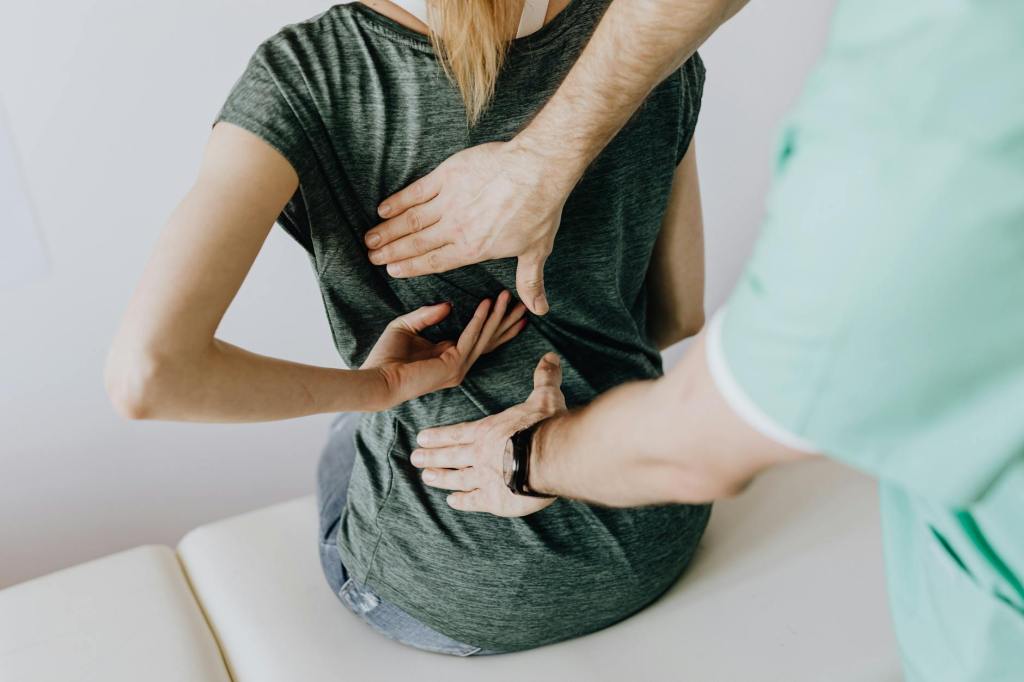
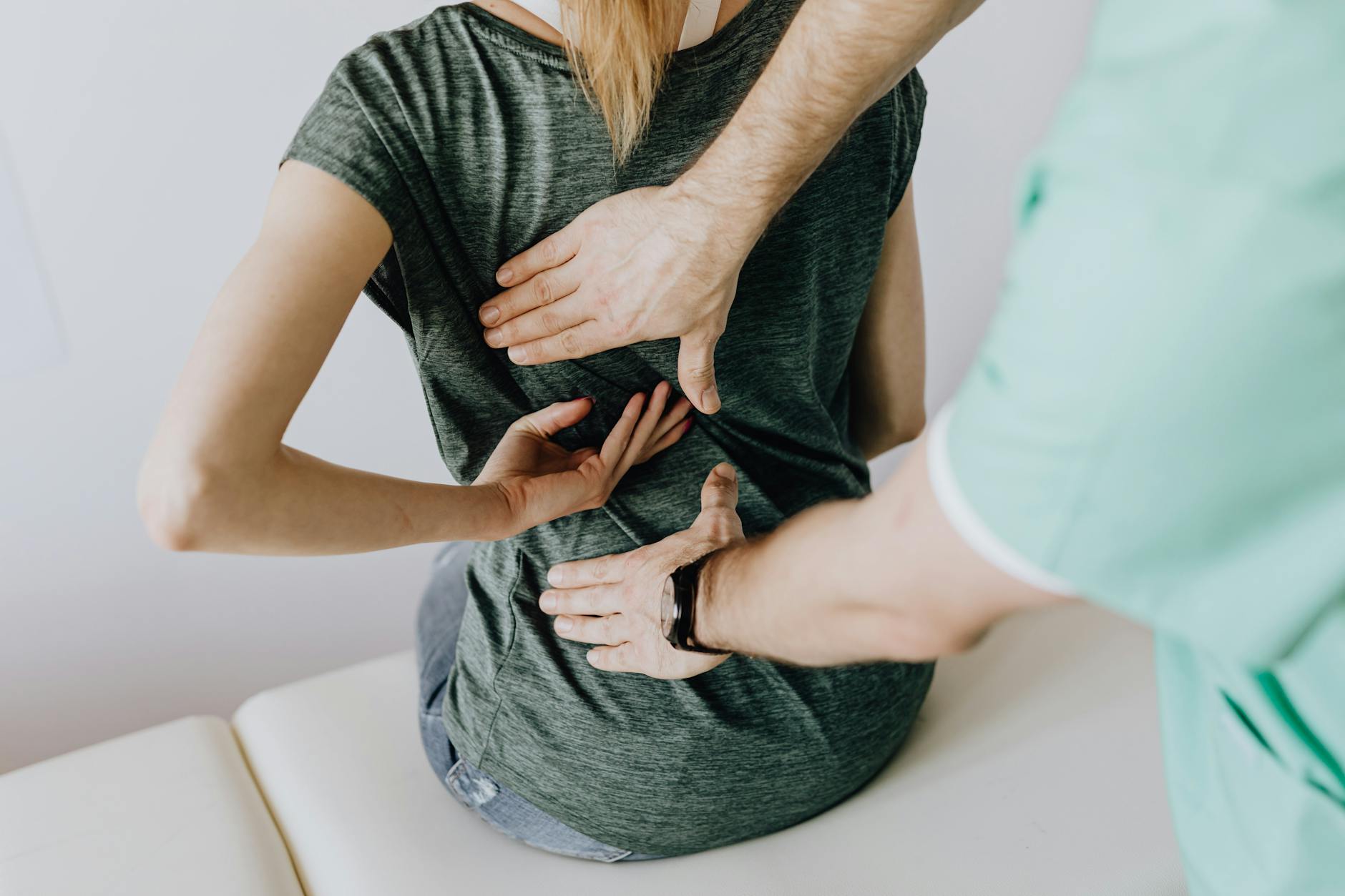
    Photo by Photo By: Kaboompics.com on Pexels.com

    About a year and a half ago my body told me to stop. Stop working. Stop exercising. Stop socializing. Just stop.

    What should have been a relatively minor middle-aged grumble and a few weeks of old lady noises turned into months of debilitation, a touch of permanent nerve damage, and a bonus year of personal lockdown.

    As the primary caregiver in our house, this caused a breakdown in the system. I worked part time to pay the bills but being a caregiver was my job. The system that ran and fed and kept the gears turning in our house, fell apart for a while and we needed some help to keep it together.

    It’s not that my partner didn’t do any of these things, but neither of us did them alone. We’ve always done a good job of dividing and conquering tasks, especially considering the additional time and mental load of our youngest child’s medical complications. But, if there’s anything we’ve learned in the last seven years, it’s that the world can flip upside down at any given moment.

    One morning, after a couple months of standard caregiver’s back pain, I couldn’t stand up. It had been a perfect storm of gradual degeneration, a “heroic” catch on some stairs, and a slip on the ice. A couple of ER visits later, I became the official owner of some thoroughly ruptured discs and a severely compressed nerve. Woot. Woot. Caregiver down.

    I’m incredibly grateful that I have the kind of partner that can and did take on the full-time job of parenting as well as all the layers and appointments that come with the conditions our youngest child deals with every day. I could manage some of this from a horizontal position, but there wasn’t a whole lot I could actually do. No cleaning, no driving, no appointments, no ER visits or hospital stays. For a good six months, he looked after me in addition to the kids and the dog. For the better part of a year, he had to do everything outside the house as well. He did this in addition to his actual full-time job. We don’t really get vacations in this family, but the man really deserves a vacation.

    My kids also stepped up to do what they could, bringing me food, keeping me company, and generally demonstrating an understanding way beyond their years, that sometimes parents get sick or hurt too. In this family, we have a decent amount of training in accommodating medical crises. When I went down our backup generators kicked into high gear.

    We have grandparents that fed us as they swooped in to ferry me to appointments and kids to extracurriculars. We have brilliant friends that stepped in for carpools and took tea with me in the bedroom a la John and Yoko.

    It was fucking hard and I’m not all better, but I am still progressing, and that’s with a tidal wave of gratitude pushing me forward.
    One thing that happens when you’re stuck on your back, for months at a time in your own little room, is evaluation. I cried a lot about what I loved and might never do again. I thought a lot about what I might be able to do, with time and healing. I waffled a lot about what direction my life should take from here on out and I got very very bored.

    I flip between hobbies the way dads in the 90s changed TV channels, so I dug up some old favourites that I could do flat on my back. I started crocheting but lying flat and holding the hook and yarn above my chest messed up my shoulder. It worked, but I have to space it out now. Bit by bit, I make little creatures out of scraps of yarn. To be honest, they’re piling up.

    I watched all the things I’d been meaning to watch. I read as much as I could.

    I started drawing again, which has been magic. I couldn’t sit and draw with pen and paper but I could prop up an iPad or doodle on my stomach like a kindergartner, so I finally got into digital art. (Only about a decade behind on that one.)

    I had to stop writing and editing (to the extent I needed to professionally), but I could point, click, and drag. So, like any reasonable Type A personality confined to a bed, I digitized our pen and paper caregiver binder.

    I am a wild party.

    I learned to use some new tools (thank you internet) and reworked the system we’ve been using to communicate and manage the ins and outs of our daughter’s care. Making graphic organizers is not the coolest hobby in my collection, but it tickled the part of my brain that needed to feel like I was contributing.

    I couldn’t be at the appointments, but I could document the shit out of everything else.

    I honestly used to think I was kind of a chill person. I was wrong.
    The tools and templates are good, I think. They help us, so I’m sharing them as widely as I can. I hope they help someone else feel like they have a little control over a hard situation.

    What surprised me, is that I felt real joy and purpose in putting them together. I’d love to do it more. I’d love to make custom versions that work for all the unique and challenging situations families like ours integrate into our daily lives. I don’t know how that’s going to play out, but maybe it will. Life is nothing if not surprising these days.

    I have had the privilege of tangible support and all the benefits of an emotionally available and loving community around me.

    I’m still on the chronic pain list. I’m still not working and still don’t feel like I’m holding up my end of the bargain as it pertains to co-parenting or caregiving. But I’m trying to pay some good stuff forward and I’m trying to get back on the rails.

    I aim to start posting regularly because this also tickles an important part of my brain that I haven’t used in a long time. I’m back. (As long as my back behaves.)

    NOTE: If you’d like to check out the art, tools, and templates that have kept me in one piece this year, click the links below.

    It’s all under Layer Cake Digital Design because life has been a layer cake of hard crusty bits and soft fluffy growth over last 7 years. More on that another time. For now, just take a look. Let me know what you think. Let me know if you have any suggestions. I’m all ears (and old lady back) over here.
    Printable tools, templates, and art for caregivers on ETSY at:

    layercakedigdes.etsy.com

    Print on demand art, wearables, phone cases, stickers, hats, and more on REDBUBBLE at:

    LayerCakeDigDes

    Caregiver support videos on YouTube at:

    @LayerCakeDigDes

  • Manageable

    Manageable

    … Intangible (ah y’all), bet you didn’t think
    So I command you to, panoramic view (you)
    Look, I’ll make it all manageable

    Gorillaz – Clint Eastwood

    I’m not sure I’ve ever really wrapped my head around this lyric, but it’s currently stuck on a loop in my head.

    I have a wee quirk that makes my brain play clips (e.g., song lyrics, short scenes from movies) when a particular word is mentioned or when a certain situation arises. I have to work hard not to react aloud when this little play button gets pressed in my head. It’s harmless, but it’s a thing.  

    For example, I can’t hear the phrase “Think it’ll work?” (Or some variant of it), without responding in my head “It would take a miracle.” in Billy Crystal’s voice from The Princess Bride. I’ve been supressing the urge to say it out loud since the late 80s.

    Similarly, I can’t hear “one time…” without hearing Wyclef Jean from the Fugees in Killing Me Softly. I’ve only been supressing the urge to say that aloud since the late 90s. 

    In 2023, it’s Gorillaz and Clint Eastwood. I’ve known the song for years. It’s a jam. I sincerely love it. But this year a particular word started to tweak my sound bite syndrome.

    It’s “manageable.”

    Manageable is, for the most part, perceived to be a good thing. In our world, in our medical world specifically, it generally comes with news that is not necessarily what you want to hear, but with the hope that you’re going to be able to do something about it.

    Food allergies = manageable. Pack safe food. Carry an Epi pen.

    Non-malignant brain tumour = manageable. Surgery and chemo…prognosis is good.

    Monocular vision = manageable. In time she’ll adapt and likely even be able to drive.

    “Manageable” is also how some minor deficiencies and shortfalls may be described.

    The ongoing chemo and dairy allergy combined mean that bone health needs to be watched and monitored. Your kid fractures a few things over a couple of years, and you manage that. Her bones aren’t bad, but they may need a boost in the long run. Add supplements and get exercise in where you can. Totally manageable.

    The term can also apply to complicated, scarier things that you just get used to and learn to manage over time.  

    Hemiparesis from my daughter’s stroke has been a big one to figure out, but we have teams of occupational therapists, physical therapists, and orthotists who’ve been helping us with this for years. As the person with the condition grows, they also problem-solve and figure out their own solutions. This condition was actually starting to feel like we could handle it. Plenty of setbacks, a pretty steep learning curve, and a shit tonne of work for a wee little kid, but life still happened around it. “Manageable.”

    But there comes a point when layers of “manageable” start to compound. The pandemic didn’t help for sure. New protocols and stressors. New additional challenges to learning and socializing. Again, “manageable”, but not insignificant for anyone.

    Continual tumour growth (though slow and steady thanks to the chemo) definitely added a few new layers too. At the beginning of this year our daughter was back for another round of brain surgery. They removed another massive amount of the tumour, which was awesome, but there have been consequences with her endocrine system**, which has not been awesome. Several new conditions requiring several new treatments. All of it ongoing and evolving. Some of it is life threatening in a whole new and exciting way.

    **NOTE: The endocrine system, if you don’t know, is a big deal. It kind of runs a lot of the show behind the scenes. All those hormones that regulate growth and development, hunger and thirst, urine output, stress responses, and sleep…the hormones we take for granted long before puberty even enters the picture, and we get slapped in the face with an awareness of how wild our body can be.** 

    Our daughter’s endocrine system took a hit with this surgery. Five years ago, it was a stroke, and we didn’t know if we’d get to bring the same kid home with us. This time, our daughter woke up her bubbly, chatty self, but it quickly became apparent that some of the systems running in the background were not online. 

    These new developments have been a lot to manage. 

    The trigger for this most recent surgery has itself become another few layers of things to manage. Our daughter has had vision in just one eye since she was three. Other than protecting the good eye with super stylish kid glasses (she has better taste than I do), vision was not something we really followed closely. She only had one eye, but it was a good one. Until of course, it wasn’t. Changes to her vision prompted her second major surgery. It took the pressure off her optic nerve, but she didn’t regain what was lost. 

    Now, in addition to managing food allergies, accessibility, and learning deficits from illness and absence, in addition to life saving precautions and treatments for an endocrine system that’s barely phoning it in, this 8-year-old is also managing significant vision loss. And for the most part, she just fucking does it. It’s absolutely wild how much she just rolls along and lives her day-to-day through all manner of madness. 

    But it’s another layer, on top of many other layers, that are being managed…and for all of us, our daughter the rockstar included, it’s starting to feel a lot less manageable. 

    We’re good at this. We’ve been doing this most of her life now. We have teams of supporters in and out of the hospital that dab our brows with a towel and push us back into the ring every time we take a hit. But you can only take so many hits before you can’t get back up.

    As parents, we’re also “managing” all those basic parent things, like trying to make sure both children get to school, that our daughter gets the opportunity to make friends with real live kids, that she learns to read (despite an embarrassing number of absences and a total lack of educational assistants for students with exceptionalities), that she gets to be an actual kid before she has to learn to manage all these extra shitty things herself. 

    I’m an organized, resourceful person and my partner is a smart, driven, dedicated parent. We work well together, and we have more resources and flexibility than many. But no tracking table or “ToDo” list can effectively capture all this. There aren’t enough hours in the day to manage all the 5–15-minute tasks and therapies and treatments we’re trying to implement and no app that can synchronize the choreography and timing of it all.

    Each of these things takes time and brain power and a little bit of soul. As a caregiver and a parent, some days I feel crushed by the weight of the (literal and figurative) binder we carry to hold all this information. I feel guilty that I’m not doing her exercises enough, or getting her to drink enough, or playing with her enough because I’m always trying to get something DONE. It’s the time as parent and kid that gets cut for the time as caregiver and patient.

    This is why I bristle at the word “manageable.” It’s not a bad word. It’s a good word. It carries hope and a plan of action. It also carries responsibility and weight that cannot be shifted to someone else. As much as we would like to lighten our load, focus on the positive, and affect some fucking self care, families like ours, with kids like ours, must accept that we cannot step out of the ring. The hits will keep coming and we will have to find a way to get up. (Cue Captain America sound bite: “I can do this all day.” I don’t feel it, but I hear it.)

    So, I have a few requests.

    To those who engage with us professionally and personally:

    Please remember that we’re trying. We’re trying so hard. We are never not trying, even when it seems like we’re not. There are no breaks, no vacations, and no off switch. All of that requires planning and training and protocols as well. There is only prioritization, and we can only carry so much up front.

    When we’re told that a condition, treatment, or situation is “manageable” please understand that a delicate balance is about to be disrupted and we’re trying not to explode. 

    15 minutes of therapy or tracking doesn’t sound like much but every day it has to work along with home reading, administration of meds and treatments, meal planning and prep, extra admin work and communication, insurance forms, emails advocating for or requesting services, extra calls with school staff, searching for shoes that fit over bulky orthotics, searching for or driving to activities that may or may not cater to your child’s particular needs, pharmacy runs, spontaneous specialist appointments and calls, midnight ER visits, and somewhere in there…we have two children that need us to pay attention to who they are actually becoming and what they need amongst the noise to be real live people.

    Oh, and we also have to find a way to be employed. Maybe maintain a relationship or two. Maybe work on being human ourselves, instead of just the sum of our functions.

    “Management” is the right word to use. Caregiving a job. It requires focus and expertise and an understanding of overarching goals and how it all fits together. It takes time to build the skills and the systems to integrate new tasks and procedures and we, as parents of medically complicated kids, don’t generally get a lot of time to do that. You are not likely the only one throwing a wrench in the system this week. We appreciate that it’s all important, but It’s. All. Important. 

    So please…

    1. Be patient.
    2. Be flexible. Your time is at a premium, but so is ours.
    3. Tell us the good news (when you can).
    4. Acknowledge the things we’re already doing and highlight what we’re doing right. This can change the course of our day completely.
    5. Remember that our (brain) storage space is limited, and our processing power is taxed. Speak plainly and write terms, next steps, and drug names down. Give us something to Google and a reliable source to consult when we have time to process what you’re asking us to do for/with/to our kid.
    6. Support caregiver leave, pay, home care, and respite. There are so many ways to do this.

    Every day, parents of medically complicated kids are doing things we didn’t sign up for and for which we have received no training. It’s a job on top of a job on top of a job.

    To those who already do this…Thank you!

    To those who do not…

    Take a panoramic view. See who we are as a family in the context of our child’s condition. For good or for ill, it frames everything for us.

    Make it tangible, digestible.

    And you’re going to use the word, please use your skill set and expertise to help make it genuinely manageable. 

    Ok…I get the sound bite connection now. Thanks brain.

    Enjoy some Gorillaz.

  • Ink It In

    Ink It In

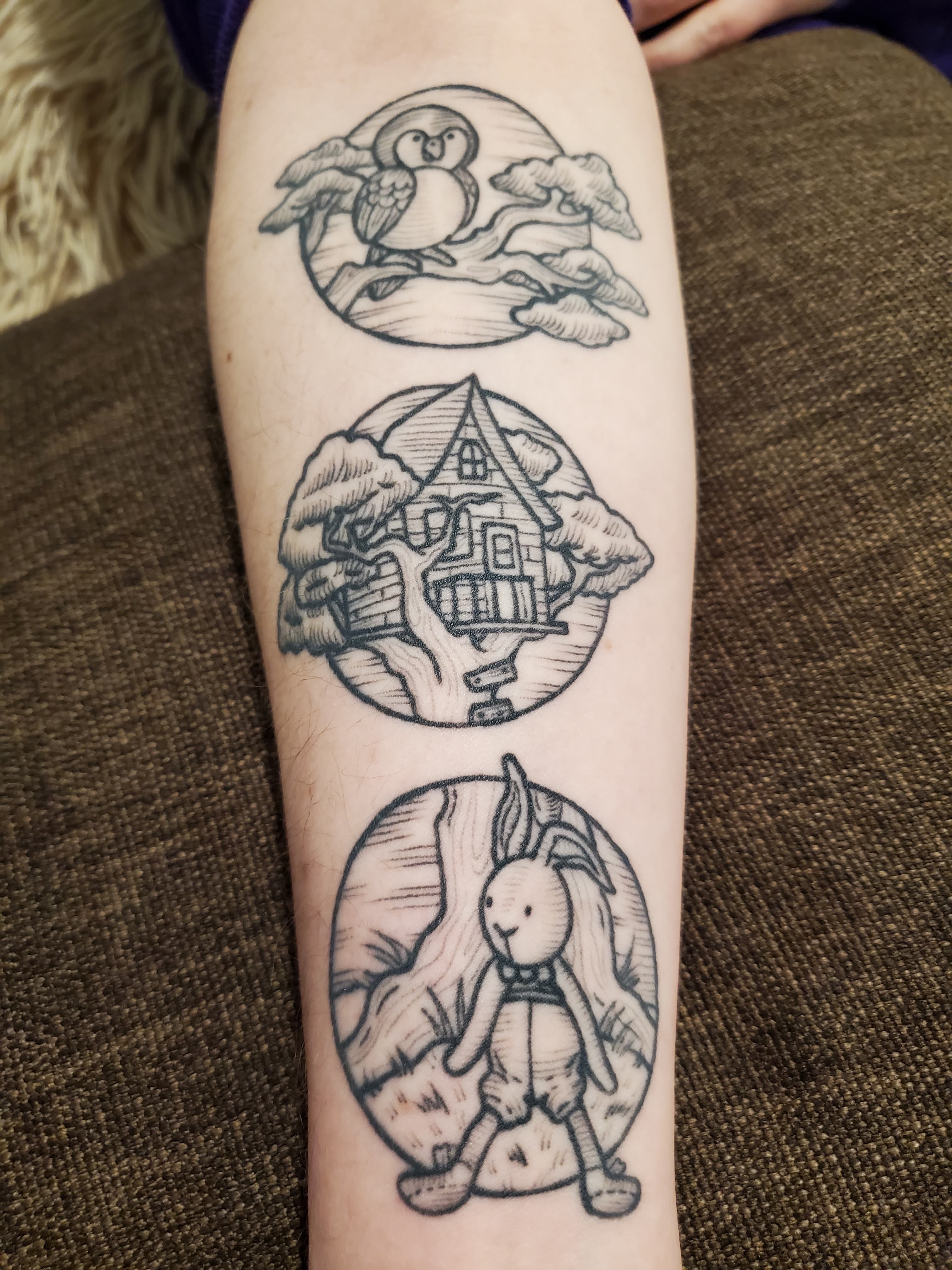
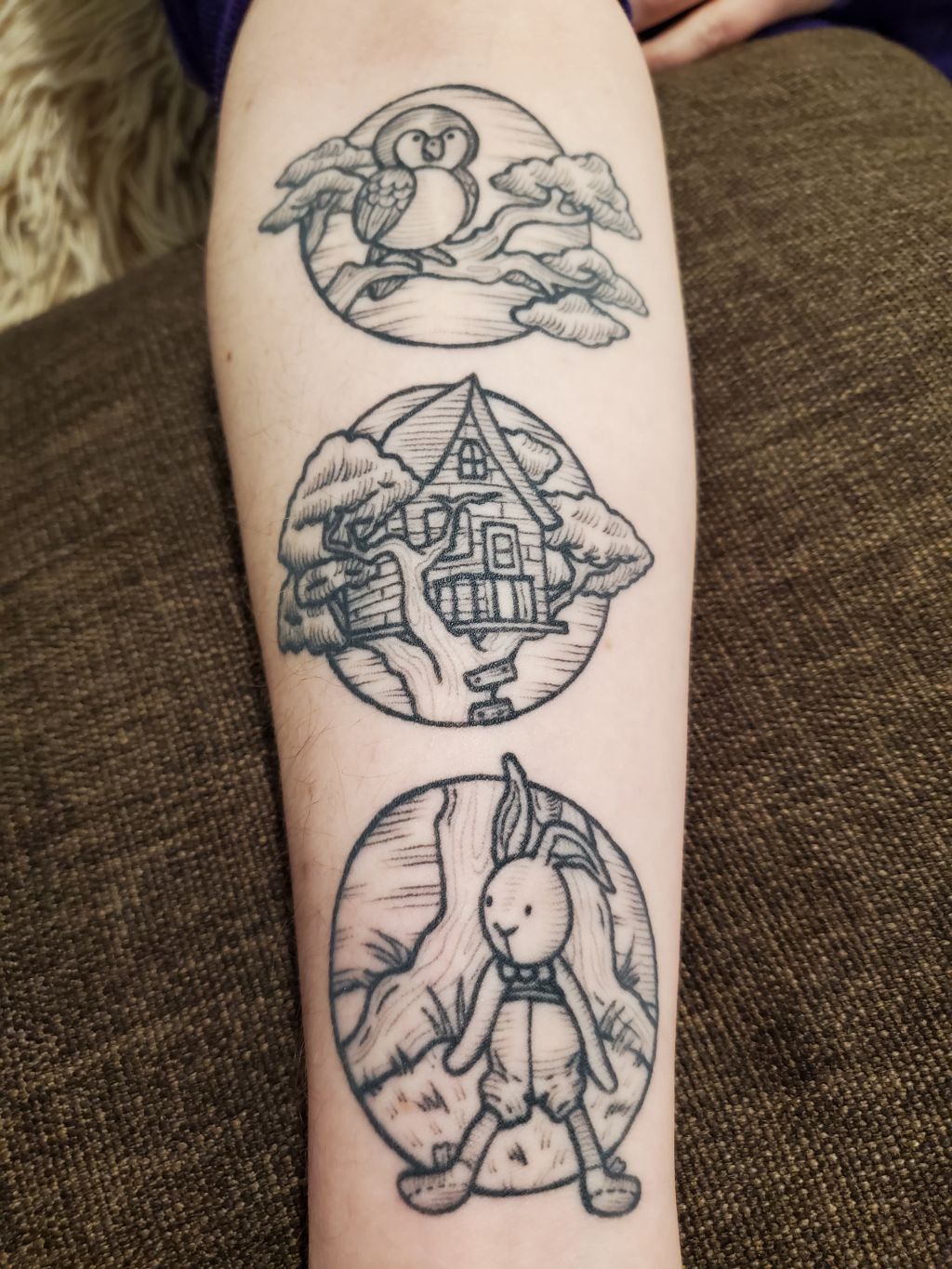
    I have a tattoo that stretches the length of my forearm, from wrist to elbow. It’s a decent sized-tattoo. It is not subtle or hidden. It is intentionally out front and on display. My tattoo has purpose and it is, in my opinion, sized appropriately to its task.

    My mother has pointed out that it is actually three tattoos. She’s not wrong, but she’s also not right. 

    There are three parts, but it tells one story. Each of its three circles represents an aspect of our family’s experience with a devastating and transformative diagnosis that will forever colour the way we see and engage with the world. There are also three levels. The first level sticks out below my sleeve and the third level sits up near my elbow. Moving through these levels helps me manifest the parts of myself that I’ve built up over the last three years to become the parent and the person I need to be in order to navigate the day-to-day in which we find ourselves. It can be joyful and it is full of love, but it is not carefree. That is simply our reality. The shit will hit the fan, again and again, and each time it does, I have three reminders very much at hand to help me put on my game face and get through it.   

    It sounds a bit fluffy when I say it out loud, and for some people, it would be bullshit. But there is power in imagery and if there’s anything I’ve learned, it’s how individually we all deal with trauma and fear and stress. My “big-ass” tattoo, for what it’s worth, helps me. And considering where we are in the world and what we’ve all been working through in the last year of upheaval and adjustment to extreme circumstances, I figured it wouldn’t hurt to share. I am not endorsing body modification as a solution to life’s troubles, but I am endorsing doing what you need to do in order to ground yourself when things are spinning out of control. That’s going to look different for everyone. For me, it looks like this.

    black line tattoo of an owl, a treehouse and a toy rabbit
    Tattoo by Sherlane White of Sleepy Bones Tattoo

    I got my tattoo a little over a year ago, a couple of years after my two-year-old daughter’s diagnosis with a massive brain tumour. It was (and remains) nonmalignant, but the devastation it wrought on her and our family can’t be underestimated. What started as a lazy eye turned into a lazy eye, fatigue, and eventually a bit of a wobble. Then it evolved to include a slight hand tremor, which lead to a proper diagnosis and admission for major brain surgery. The surgery was generally successful in terms of tumour reduction but it came with a side order of stroke and resulting hemiplegia (paralysis on one side of the body). Issues with intercranial pressure meant the installation of a shunt to drain CSF fluid, and that came with its own lifelong risks. She lost vision in one eye. Then came rehab and chemotherapy and shunt failures. Every step along the way has felt too extreme to be real, like someone else’s story. But it’s all been very real and it has, for good or for ill, become the dominant narrative in the story of our family.

    Over the past year, this whole sci-fi existence of ours, where up is down, left is right, and the world is scary and uncertain, has become a lot more relatable. It’s taken a global pandemic, but there has been an exponential increase in the number of people who understand that the highly unlikely is still very much possible. We’ve all had to find a way to wrap our heads around historical levels of disruption and fear.

    It’s not, unfortunately, our first rodeo. We are used to safety protocols, isolation, and big, scary questions. We don’t like the conditions or constraints and we’ve had to follow all of it more strictly than most, but we’ve found ways to just fucking do it. We cope. We get through stuff. We’ve learned to effectively hold it together (more or less), for as long as necessary, when things get hard. They’ve been hard for a while.

    I find it helps to take control of the narrative and to break it into pieces you can stomach. It helps me put our experience into perspective when I get lost in a thought spiral. I tell myself a story about the battles we have won. I acknowledge the mistakes we have made. I try to balance guilt and regret with the insight and power and skills we’ve earned along the way. I don’t think storytelling is a revolutionary technique, but lessons learned through experience can be hard to remember in a fog of fear and anxiety, so I paid someone a few hundred bucks to stab me in the arm with them for a couple hours…y’know…to make them stick.

    I can tell my kids the story as well, so they don’t forget what we have, what we’ve gained by living through it, and the part they play in writing future chapters.  This story isn’t wrapping up any time soon, so we all have to learn its lessons. 

    My “big-ass” tattoo (or three moderate-ass tattoos) shows three views of the same tree. No surprise…the tree represents our family. It’s a family tree. I didn’t play coy with the symbolism there.   

    At its base, nestled in its roots, sits a floppy, well-worn stuffed bunny with exceptionally high pants. It’s the bunny my daughter held as she sucked her thumb in toddlerhood, before we knew about the tumour. It’s the companion she quietly cradled in the ICU, head shaved and swollen and raw before her speech came back. We dug it out of hospital sheets and cuddled both of them in a mess of wires and tubes as we stared into the face of a thousand unknowns. It’s the bunny she sleeps with now, three years later, tucked into a Frozen 2 duvet.

    The bunny at the base of the tree is there to say (get ready to groan) that somebunny loves you. Somebunny will always love you, and will be there for you, from the roots up. This kind of love is a grounded thing, a practical thing. We can hold onto it when gravity reverses itself and just grow. Being there and loving deeply can bring a kid back from the dark.  Being there and loving each other can keep your roots in place when you want to run away because it’s all too much. And also remember that your roots tangle with the roots of others. They help to make the ground more stable for everyone.  When you hold on, others can hold on as well.  Be there and be somebunny for somebody.  Start with that.  Lesson #1.

    Moving up a level on the tree, you’ll find a scene from my childhood. I was pretty fortunate to have a legit playhouse in actual trees that my dad built from scraps of wood and miscellaneous leftovers from home renos and repairs. The tree house on my arm, snugged into the crook of the tree, is where Lesson #2 lives.

    In the beginning, it felt like our daughter was lost. We didn’t know for a while if she would come back to herself. We  were lost too; living in hospitals, divided from each other and the world. The way home felt epic and elusive. We didn’t know when we’d get back, what it would be like, or how we’d get there. We’d spent the first two years of her life navigating the logistics of severe food allergies but managing the practicalities of medical vulnerability and physical disability was completely new and overwhelming.

    Our house needed to change. Our daughter’s hemiparesis after her stroke made stairs impassible mountains. Getting in or out of the house required a team. Everyday trips around the community required equipment (walkers and wheelchairs) and planning. Being almost anywhere we’d always been, took work. It was a ladder we had to climb every day and everything involved a lot of problem-solving. It was hard to get back to a sense of “being home” after four and a half months in a highly medicalized world and it was hard to incorporate all the new challenges we were facing into the way we lived. But we did it. 

    Our home, hard-fought to regain, became the safest, easiest place to be…even if it was a struggle to get there.

    On my tattoo, our home is the treehouse, atop a cobbled together ladder of rough hammered planks, in the shelter of leafy branches. It’s a good place. It’s a climb, but there will always be love and strength there, along with a healthy dose of problem-solving. That’s Lesson #2.

    At the top of my tattoo and close to my heart, there’s an owl. My son, who never asked to play second fiddle to the demands and damage of a mass of errant cells in his sister’s brain, likes owls. His reasons are his own to describe, but for me, there’s a connection with wisdom, an awareness of life in the dark, and a little ferocity. He was only five when he sat in the ER next to his sister. He had to grow up quickly as we all grew into new roles and the stress level in our lives was cranked up to eleven. He copes with change and uncertainty on a daily basis and generally tolerates the fact that there are times when her immediate needs might trump his own. He appreciates the cautions and protocols better than many adults and worries for her, even though we try to help him understand that’s not his job. He is an eight-year-old who puts on his game face at 2am, when his sister has a shunt failure, to gather the iPad and help get her wheelchair out to the car while we clean up vomit and grab the emergency bag from the front hall closet.

    He is not a parent, but he has chosen his role on the team and he plays it well. In addition to his alternating roles of entertainer and brotherly tormentor, he’s a therapeutic cheerleader and amateur physiotherapist. He learned to swallow pills so he can take his vitamin D the same way she takes her thyroid medication. He gathered his own friends on the playground to play a version of tag that accommodated her speed when kids her age left her alone in the dust.

    Our son is not perfect and he is justifiably angry and frustrated when attention is divided or a fuss is being made about his sister and he’s being pushed to the background. But he’s as wise and understanding and expressive about his feelings and needs as we have any right to expect from an eight-year-old. He doesn’t take it out on her and he doesn’t hold it against her. Generally, his frustration is directed at the grown ups that should know better (including us) or at the people who need a reminder that he is vulnerable and important too. That’s a hard thing to do. That is badass. Owls are badass. We all need a wise, thoughtfully fierce creature in our lives. The owl lives in the tree of my tattoo to remind me to nurture that strength in him, to nurture him in general, to nurture those traits in my daughter as well, and to be thoughtfully fierce myself when I need to be. We are all going to have to look out for each other and advocate for each other because a mass of errant cells are working to ensure our paths in life will not be straightforward.  That’s the third lesson. 

    As I said, it doesn’t take a genius to figure this stuff out. Some of it should be pretty common sense, but the universe is a wild place. We can’t always predict where we’ll end up or the parts we’ll be called upon to play. It’s important to know who you are and how you want to exist as the plot unfolds around you. There’s only so much you can actually control. 

    • Be there with real, practical love that others can hold onto. 
    • Make your home a place of love and safety, in a form that makes sense for you. 
    • Be wise and fierce in the dark. Watch out for each other. 

    These are the lessons of the story I have written in literal blood and ink on my forearm. I’ve written them to remind me who I need to be; for myself, for my partner, and particularly for my kids. My big-ass tattoo exists to remind me of the part I play in moving our story forward and it reminds me that I am uniquely qualified to play it. I have helped to love a child back from the dark, I have helped to build a family that can weather some serious fucking storms, and I have allowed myself to break down and reassemble in a thousand different ways to do it. I wouldn’t choose our story and I wouldn’t wish a lot of it on my worst enemy, but I’m proud of what we’ve all accomplished and I’m proud to wear our victories on my arm. When I see those little bunny feet sticking out the bottom of my sleeve, I can breathe for a moment and remember that we can do great things in little, tiny steps. I can trace my fingers around the outline of our home to remember the innovation and creative thinking it has taken to adapt. And I can bring my wrist to my shoulder to protect and shield those I watch over. 

    It’s just a tattoo and I’m just another former 90s teen with some “ink.” But we all need something to make the hard stuff make sense. Whoever you are, and wherever you are in your narrative, I wish you valuable lessons and a way to make them stick.